Marketing
Chicago Milkweed Project
Building a brand and website to help Chicago kids restore Monarch habitat, one milkweed plant at a time.
Building a brand and website to help Chicago kids restore Monarch habitat, one milkweed plant at a time.


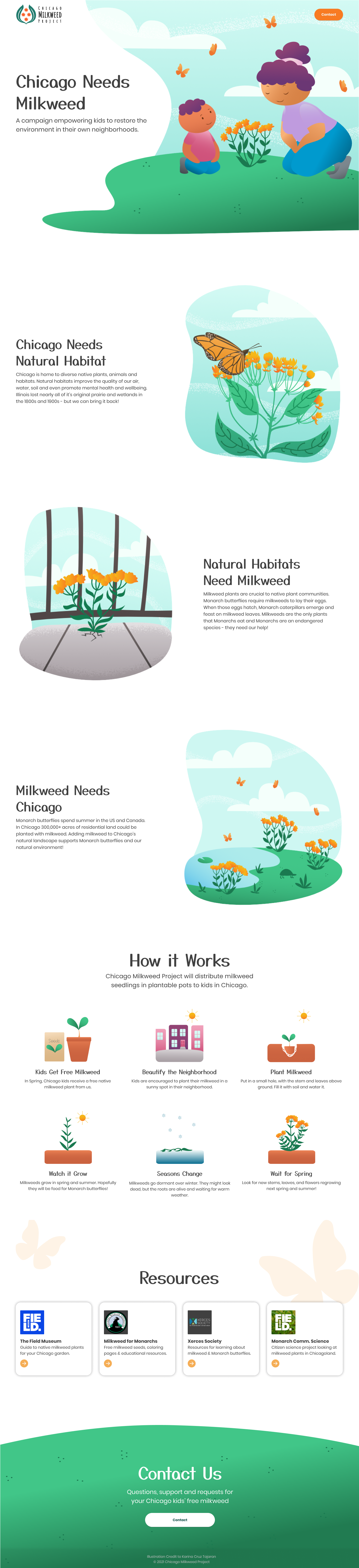

Engaged 2019-2020 with a grassroots initiative teaching Chicago kids to restore Monarch habitat.

The client needed a brand identity and website to launch and promote the initiative.

A live site and brand that helped distribute 200+ milkweed plants across Chicago.

Project Lead & Design Lead

1 Visual Designer, 2 Developers

Led client discovery, brand direction, website IA and responsiveness, and wrote dev specs.
The Chicago Milkweed Project began as a friend wanting to empower kids to restore their own neighborhoods by planting milkweed, supporting Monarch butterflies and Chicago's broader natural environment. I brought the project in through Code for Chicago and staffed it with a small volunteer team: myself as Project Manager and Design Lead, a Visual Designer, and two Developers. As Project Manager, I stayed the primary point of contact for our client throughout the engagement, coordinating between her and the team.
Without an opportunity to participate in a hands-on project, kids might never understand these effects, or get the chance to help. Giving away milkweed plants doubled as an educational, fun activity while promoting real growth of milkweed in the Chicago area.
I led client discovery to identify the project's logistics and goals, and to shape a brand that could engage families and promote the initiative effectively.
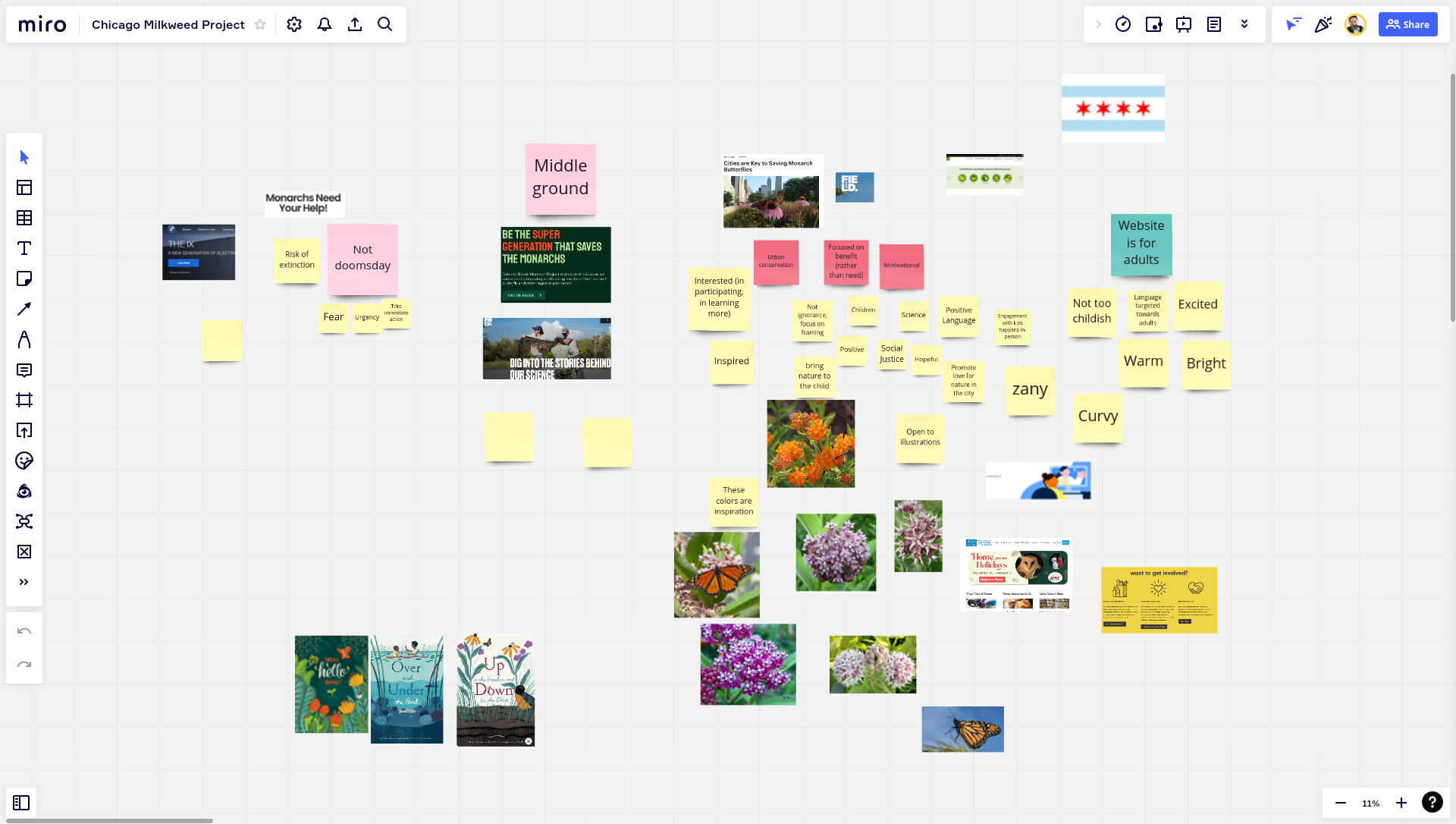
I led multiple discovery sessions to help define how the brand represented itself and what we wanted users to walk away with. Since the audience were kids and their families, we landed on a theme of friendliness, fun, and not overtly preachy.
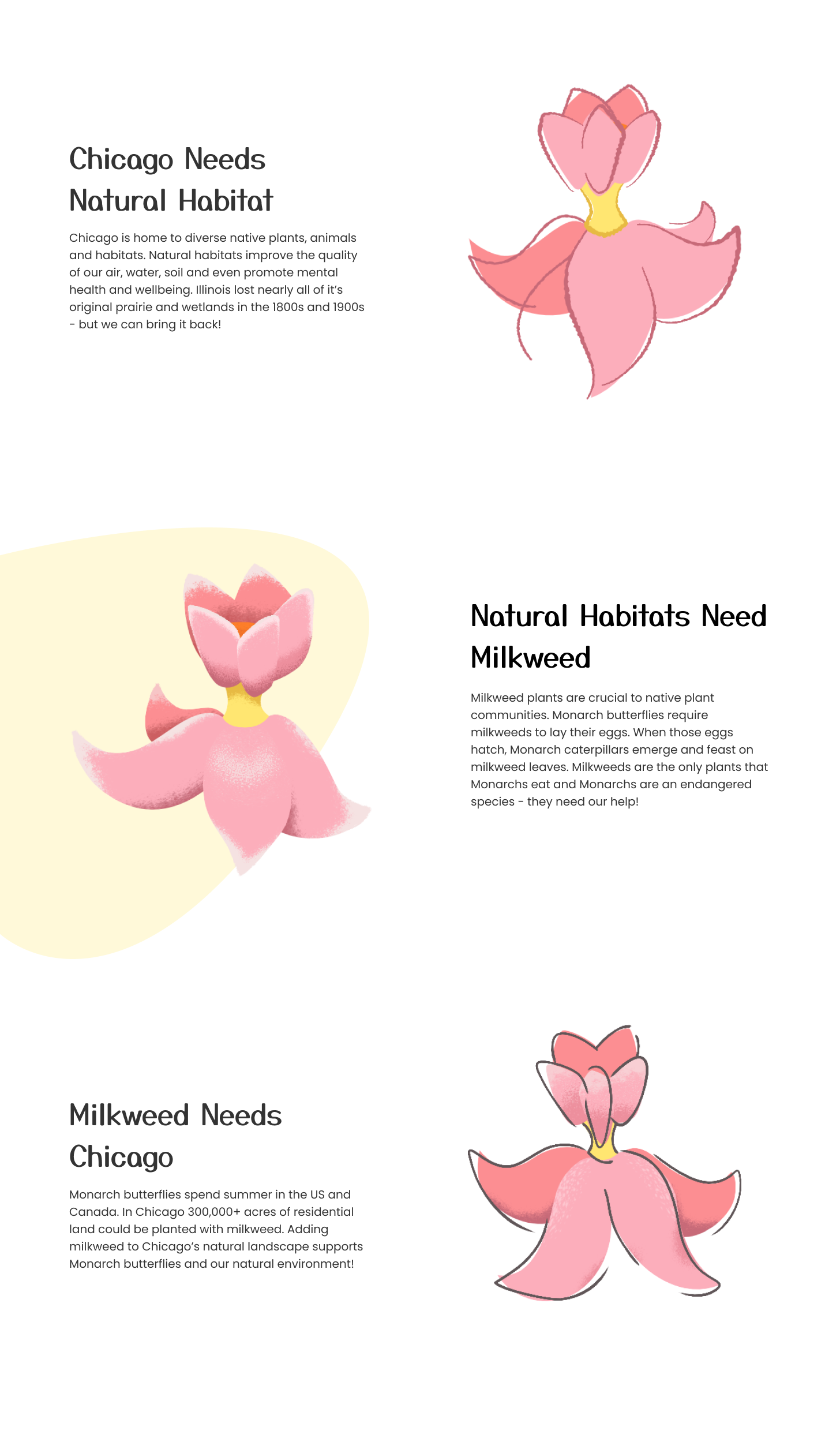
We wanted copy that encouraged positive behavior, inviting kids to plant rather than scaring them into it. The illustrations were vibrant, joyful, and anatomically accurate rather than abstracted. Over the course of multiple feedback sessions, our visual designer created the artifacts for the logo and illustrations.
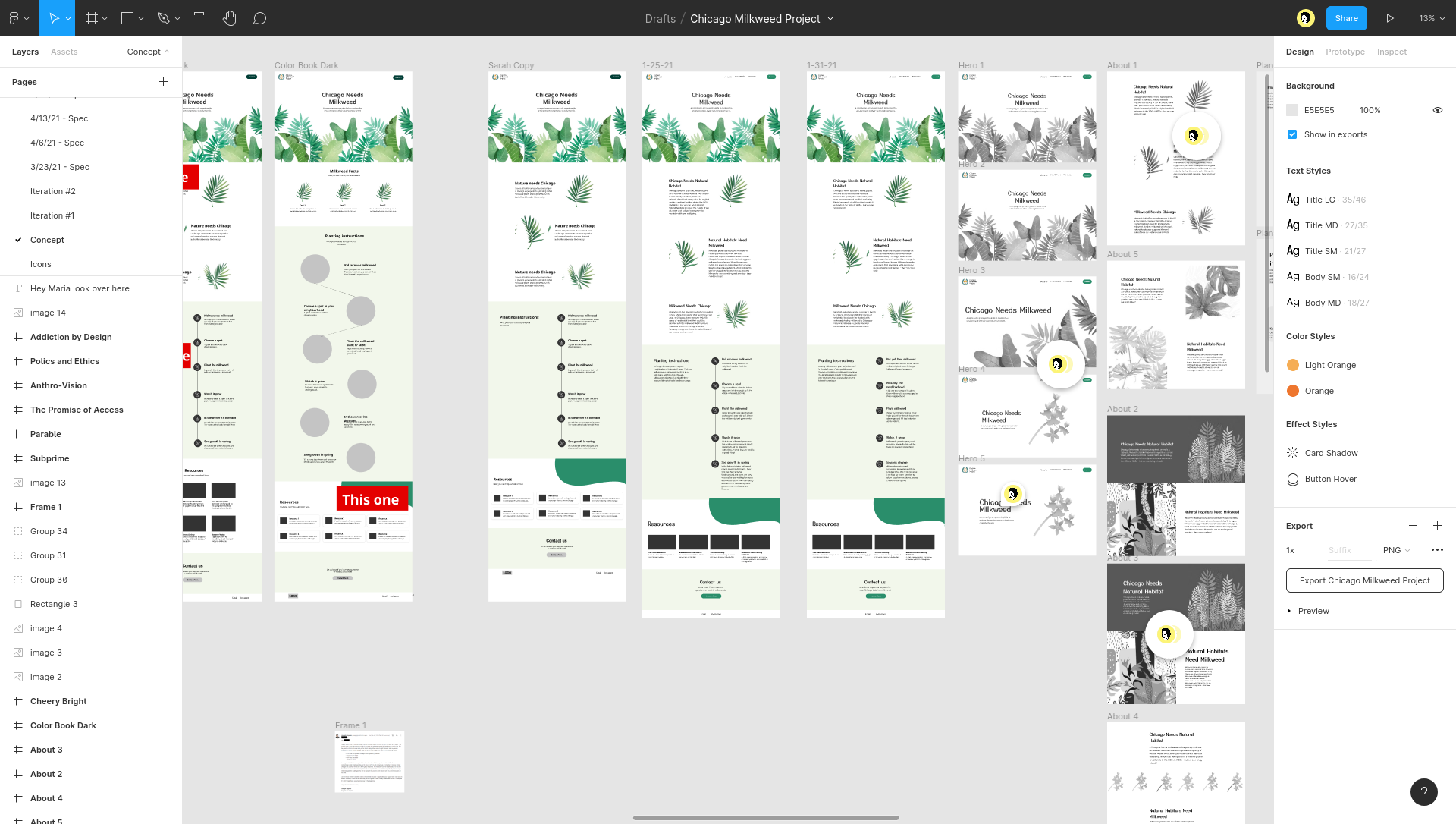
Throughout the course of this engagement, we identified the website only needed to do a couple things: (1) introduce the cause, (2) give ideas on how we might solve it, (3) provide resources for more information, and finally (4) create a contact mechanism for schools to follow-up or reach out. The site was similar to a lot of marketing efforts: craft a worthwhile and concise narrative to get you to take action. As our client reached out to schools in the Chicagoland area, she would send the website as a means of establishing legitimacy and communicating what she was attempting to accomplish.
Throughout the feedback sessions, I structured the website's information architecture through Figma and defined and relayed the spec to our developers who coded it from scratch.
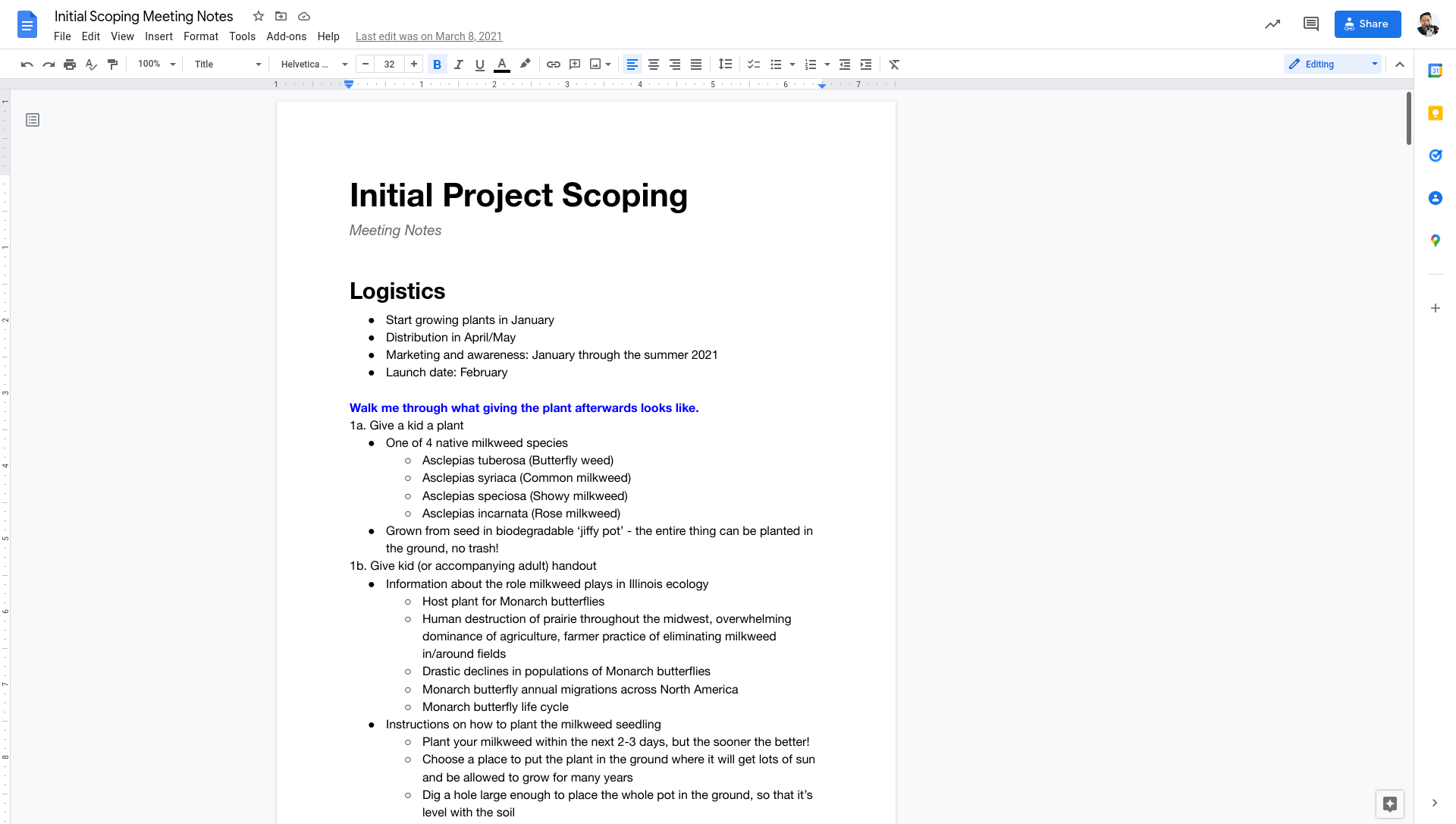
The initiative began in December 2019 and formally started work in January 2020. The team met remotely at least once a week for a 30-minute check-in, and met with our client as needed whenever we had something to share or review.
I still believe the systems we use at work are just as important for keeping volunteers organized and motivated. More specifically, I kept this team relatively small so that everyone had something to contribute. When I assigned work through our kanban board, I tried to write tickets that were manageable and didn't have major dependencies. For example, for the developers I would break up work per section of the site. I would also rely on them (since I'm not technical) to tell me if there were any gaps in the technical portion that we needed to cover.
Although we could have facilitated this project asynchronously, I have found that the mechanism for meeting once a week creates an opportunity to build community (because we see each other's faces and use that 30 minutes to connect broadly), and use it as a deadline to submit your work. I believe in having deadlines, especially for volunteer projects, because having one creates an accountability measure. I've never had to fire a volunteer (maybe once in the 4 years at Code for Chicago), but if they miss a deadline more than once then that becomes a conversation of, "are you sure you have time to dedicate to this project?" Usually, people self-select themselves out once they realize they missed more than one deadline. Having deadlines and small tickets helps articulate the team's capacity (there is such a thing as too many volunteers) and the individual volunteer's capacity (if they truly have the time and motivation to contribute).
With all these mechanisms in place, we had a structured process for following through with this commitment. Our active engagement wrapped in Summer 2020. Due to COVID-related restrictions, our client wasn't able to start actually distributing milkweed until 2021.
COVID-related restrictions delayed the actual plant distribution until 2021, when over 200 plants reached Chicago families across Berwyn, Pilsen, Hyde Park, and Lawndale.
The client later moved away from Chicago and didn't continue the initiative in their new city, so this case study reflects a point-in-time engagement rather than an ongoing project. The original site is no longer live.