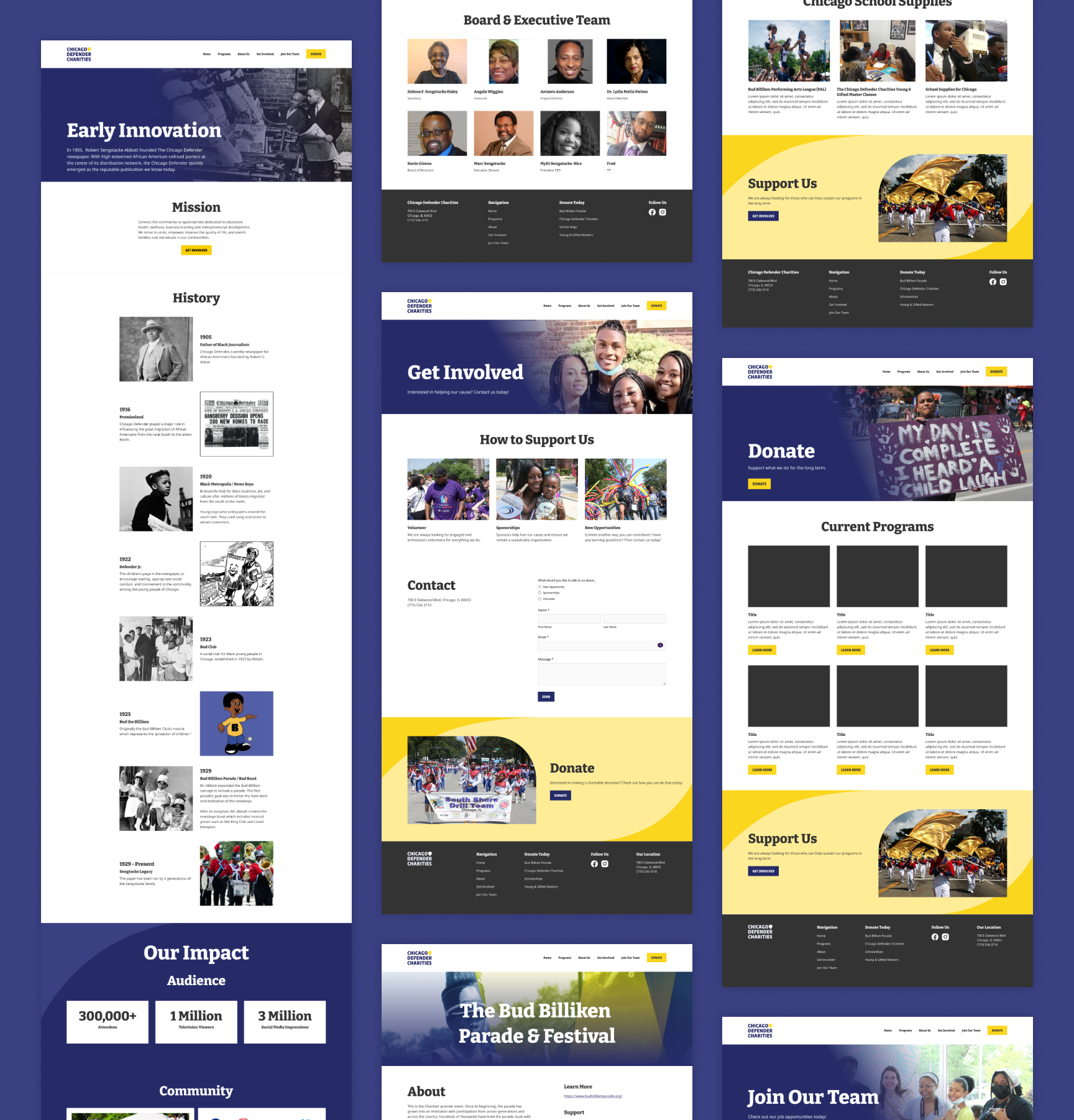
Brand & Web Design
Chicago Defender Charities
Consolidating a scattered online presence into one branded website, and staying accountable when the feedback loop broke down.
Consolidating a scattered online presence into one branded website, and staying accountable when the feedback loop broke down.
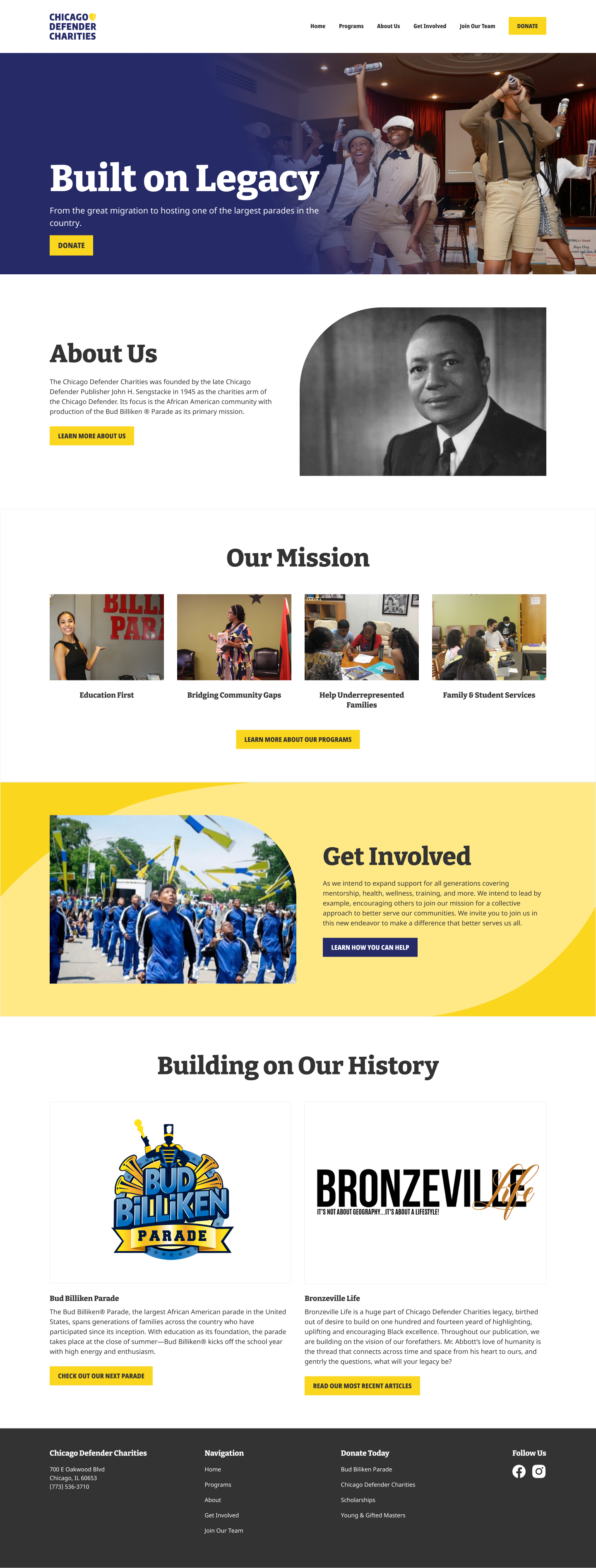

Engaged April 2021- March 2022 with Chicago Defender Charities who hosts the Bud Billiken Parade.

Their presence was scattered across platforms with no clear brand.

A branded Squarespace site consolidating programs, still live a year later.

Project Lead & Developer

4-5 Designers, 1 Developer

Led client discovery, workshops, some research, supported the Squarespace build.
Chicago Defender Charities (ChiDC) has run the Bud Billiken Parade and supported the African American community in Chicago since 1945. They also have a scholarship program, education programs, and created the online zine Bronzeville Life. I led this engagement with a team of 4-5 designers and a developer, working alongside ChiDC to consolidate their scattered online presence into one branded website.
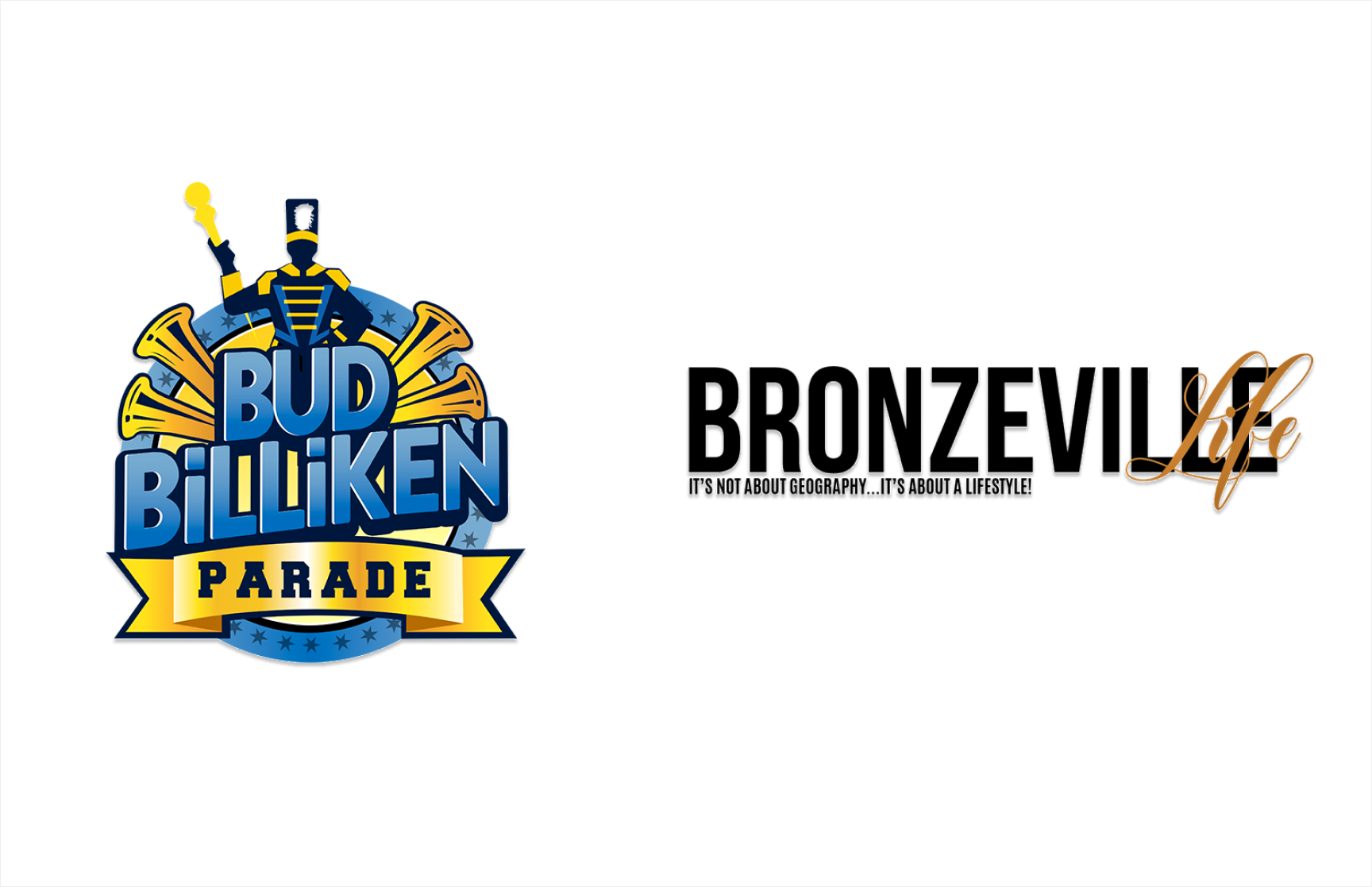
At the time, people could only learn about ChiDC through Mightycause, the Bud Billiken Parade site, Bronzeville Life, and Facebook, each showing a slice of what they did. On top of that, ChiDC had no branding standards to unify any of it. We needed to figure out how they wanted to show up, and build something that could scale with them.
ChiDC wanted to bring the Bud Billiken and Bronzeville Life sites together under one platform, but the right technical direction wasn't obvious. At the beginning I led stakeholder interviews to understand what ChiDC actually needed, which pointed us toward Squarespace as the right fit.
As a start, I ran a series of internal workshops with the designers, going through IBM's Enterprise Design Thinking courses together. Throughout the courses, we used what we knew about ChiDC as our throughline so there was context for the exercises. Additionally, this was a great chance for designers of different experience levels (some junior, some transitioning to UX) to build a team knowledge base of how we approach this project.
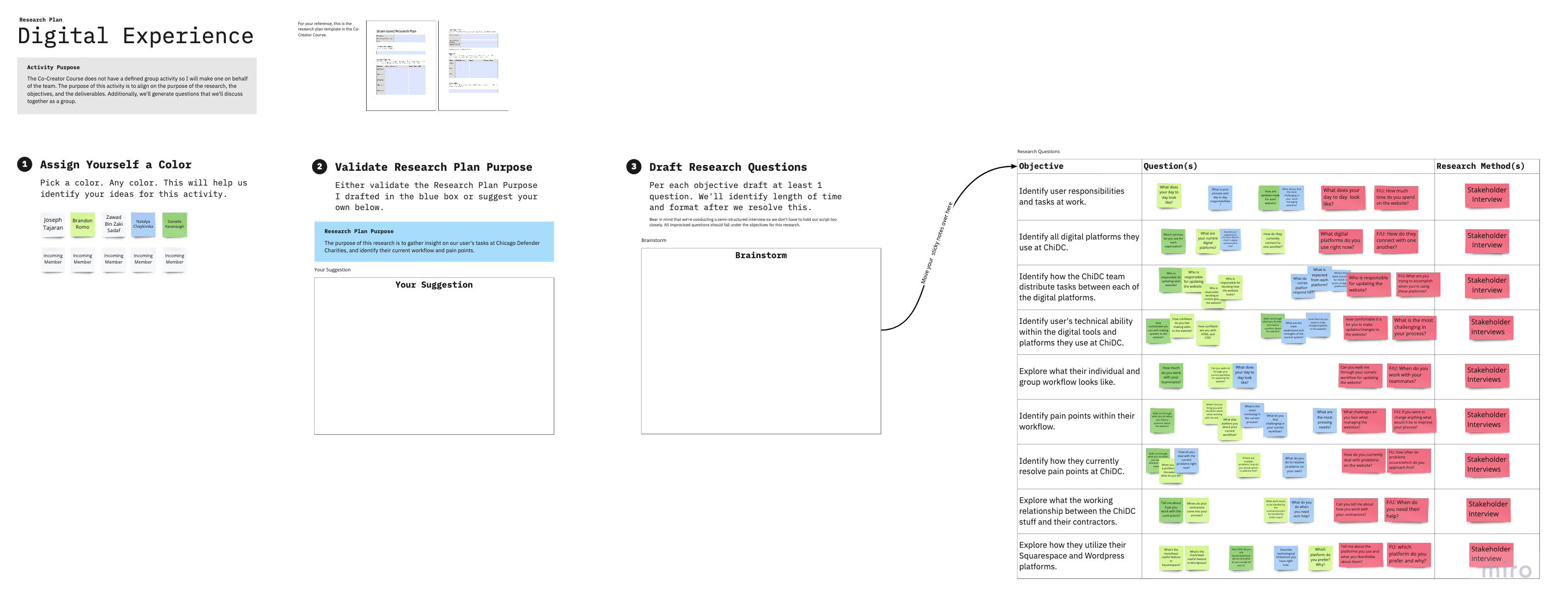
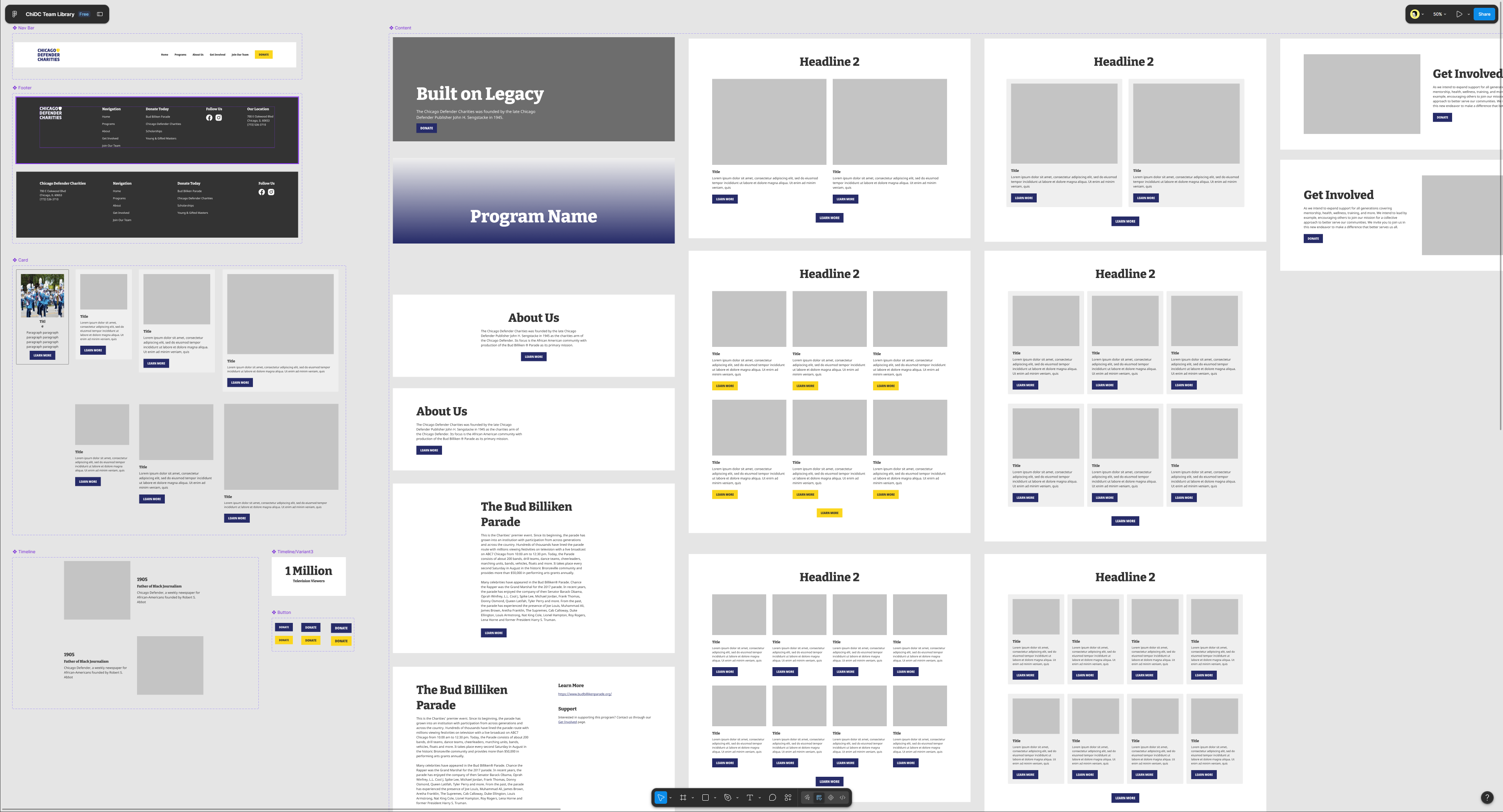
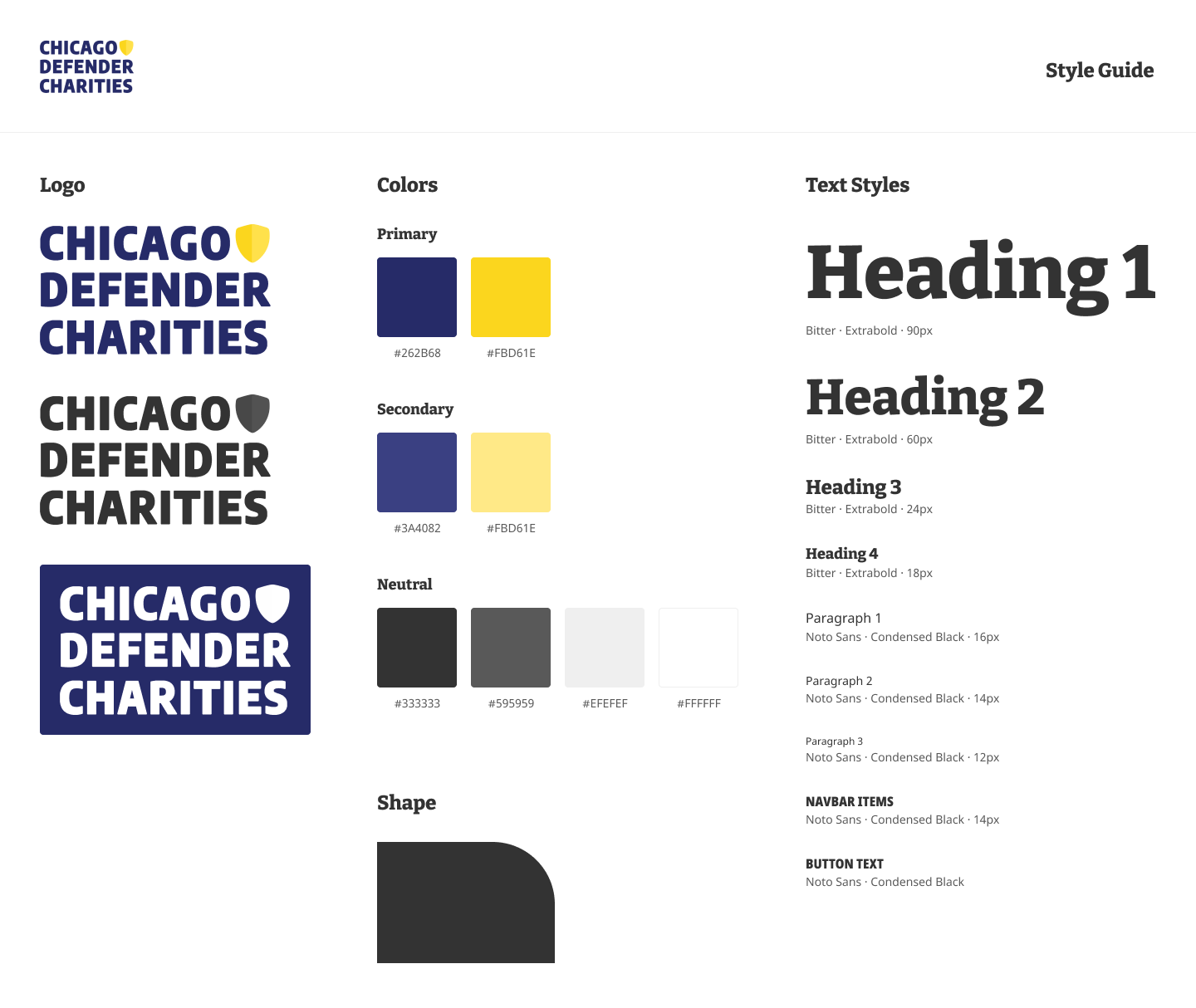
As we navigated this project, I used this time to define and educate on how we could build a design system. As I assigned small tickets, the team would operate under the same design language, and use this as a means of practice for those who have yet to build one themselves in Figma.
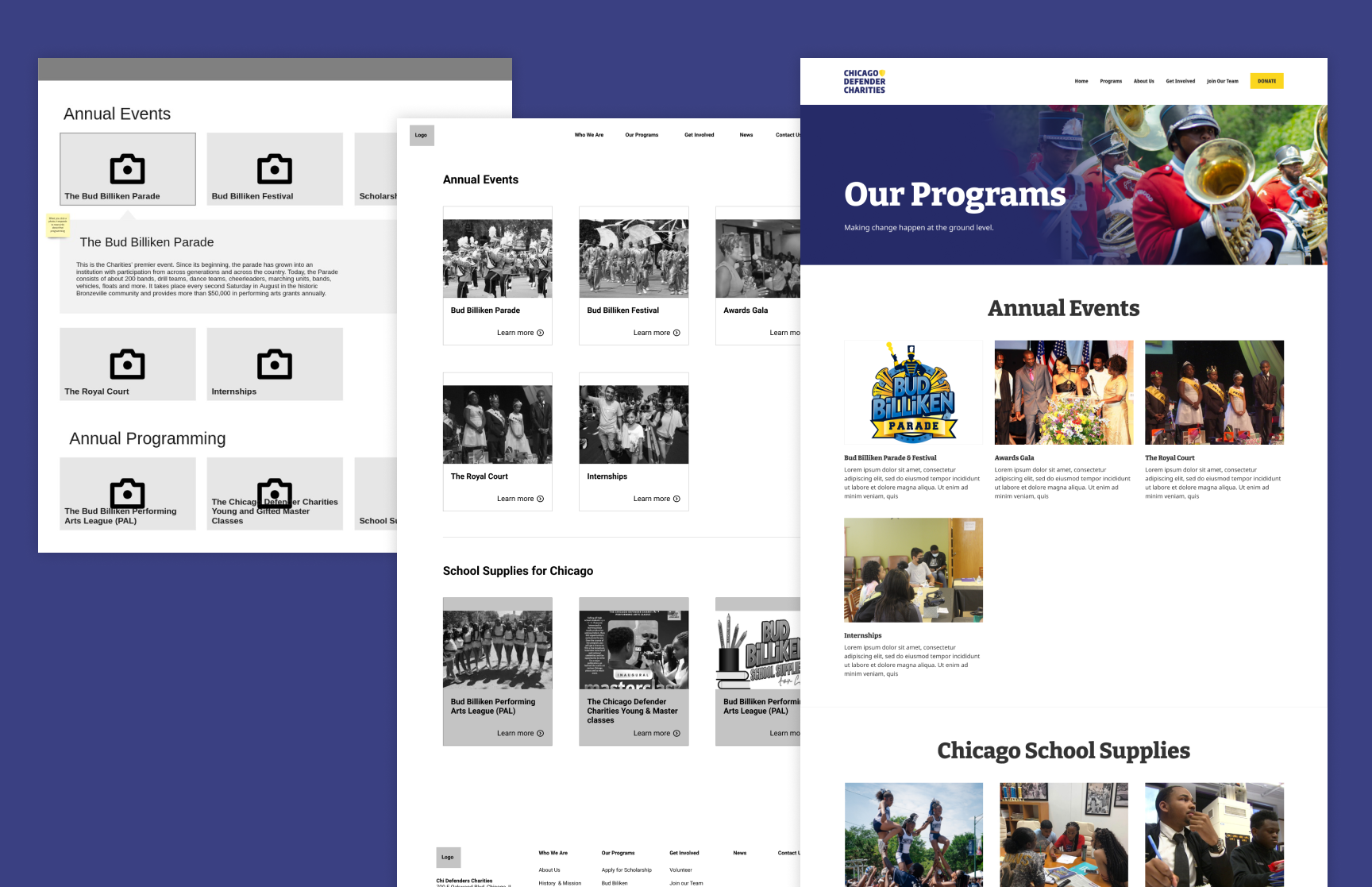
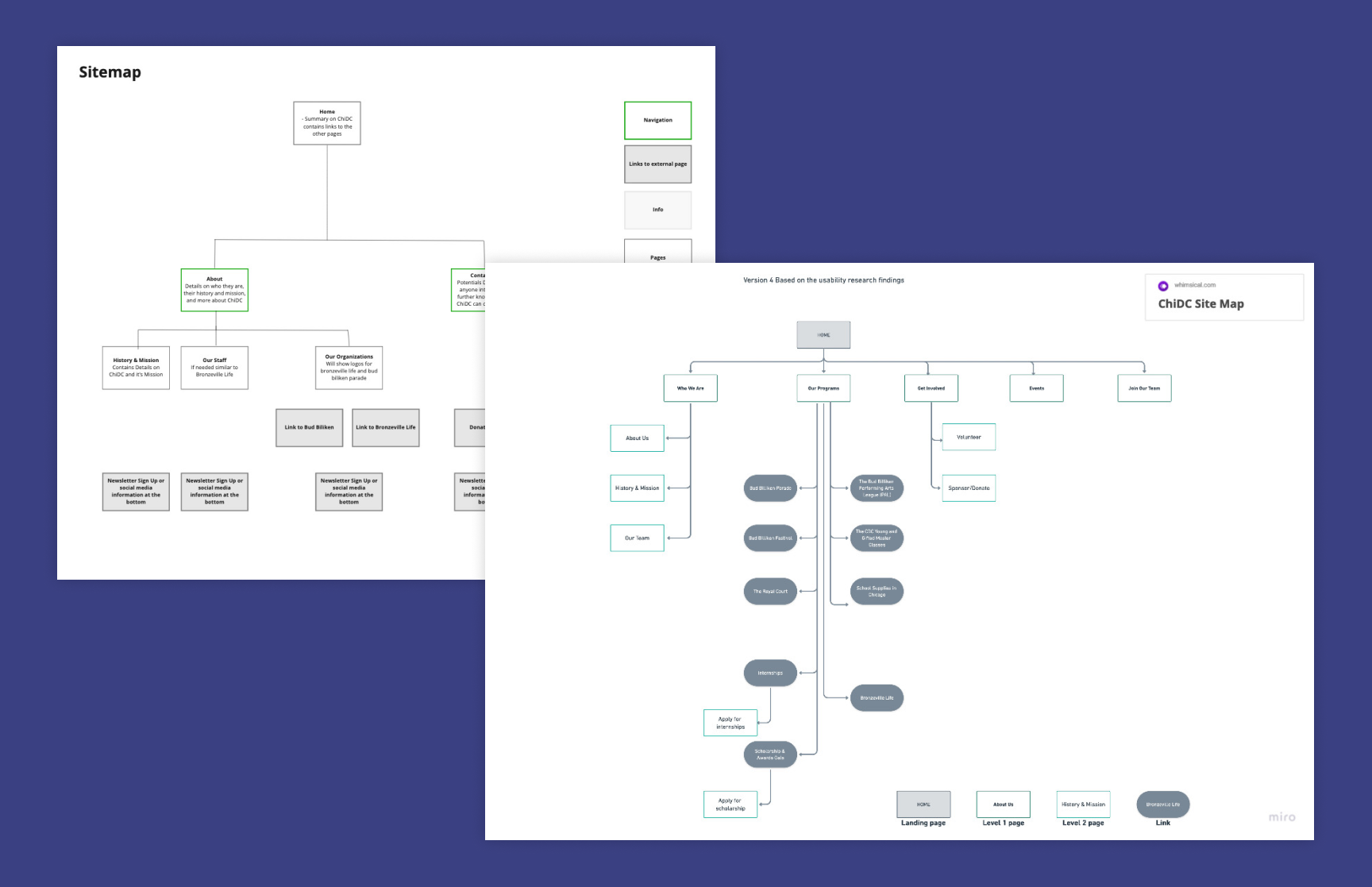
One recurring problem: people thought ChiDC only ran the parade, when in reality they supported multiple ongoing programs. The team identified user personas, ran a card sort to shape the site's structure, and used that to build a dedicated Programs page meant to finally make the full scope of their work visible.
Once we had a structure, I had the team lead a research study combining a first-click test and user interviews, partly to validate navigation, partly to support ChiDC's goal of increasing donations through the site.
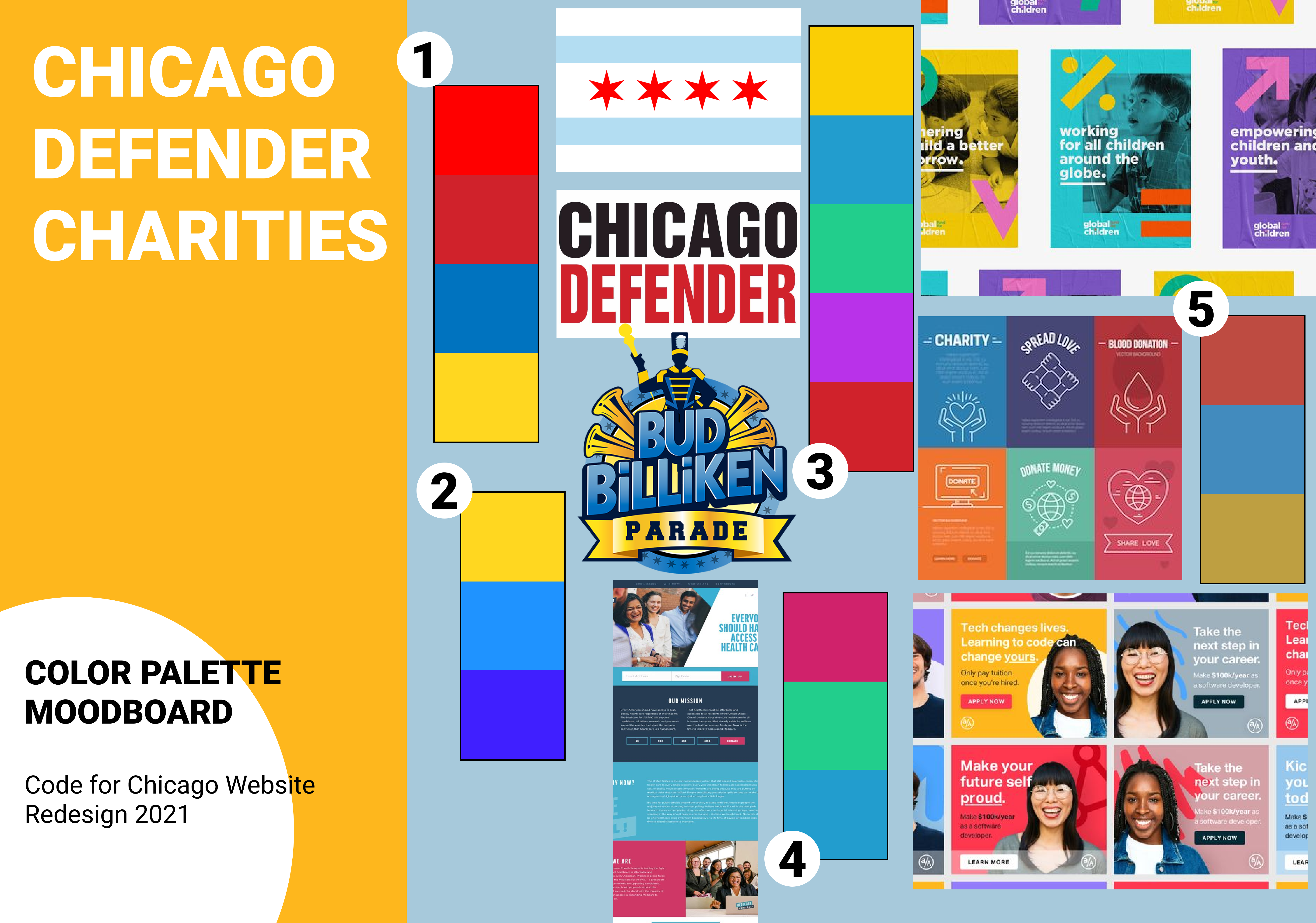
I facilitated a branding workshop with ChiDC to land on four keywords that captured their identity, then pulled visual inspiration from comparable nonprofits to shape early color and typography directions.
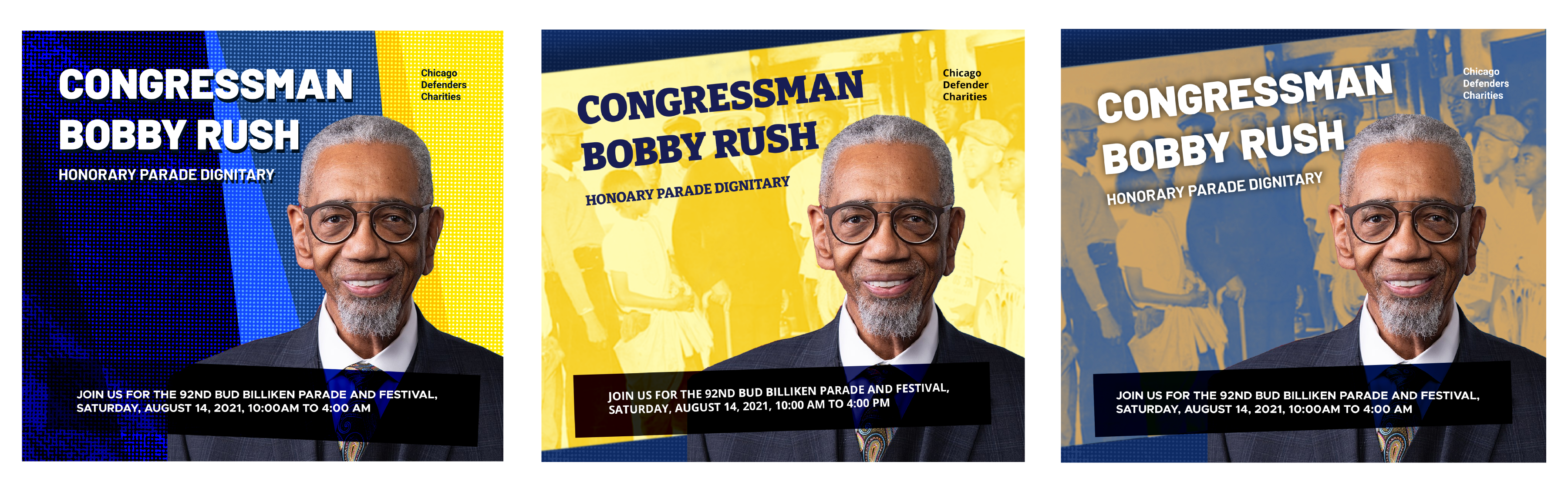
From there, I worked with the design team to develop and refine visual concepts, presenting them to ChiDC for feedback and narrowing toward a final direction.
Feedback throughout this engagement didn't come from a consistent group. Different stakeholders would show up to different sessions, sometimes with different priorities, and the people who gave direction weren't always the same people available to review what we built in response. Communication slowed as the project went on, and by the end, I wasn't hearing back at all.
To navigate this, I eventually established boundaries on this feedback loop. While I received their feedback, I always made clear what was possible to change at certain stages of the process and what had to be definite on our side. Unfortunately, I didn't clearly define how many feedback loops we permitted so this had to be negotiated on our end mid-way through the project.
At a certain point, I made the call to set a hard end date for the project. Even though this was a pro bono project, we did have the client sign a contract, stipulating the terms of the collaboration. I had learned from previous engagements that the client relationship is even more pivotal than ever because unlike a paid engagement, a lot of it rests on the goodwill on both parties. Both the client who is receiving the product for free, and having to respect the volunteer's time and commitment. Everyone wanted to walk away with an outcome and I had to make it clear to the team we could only do the best we could do with the time and energy we had available.
We delivered everything we'd promised, on the scope we'd agreed to, even without the closing feedback loop we'd hoped for. I wasn't willing to let the team's work stall indefinitely waiting on a response that wasn't coming.
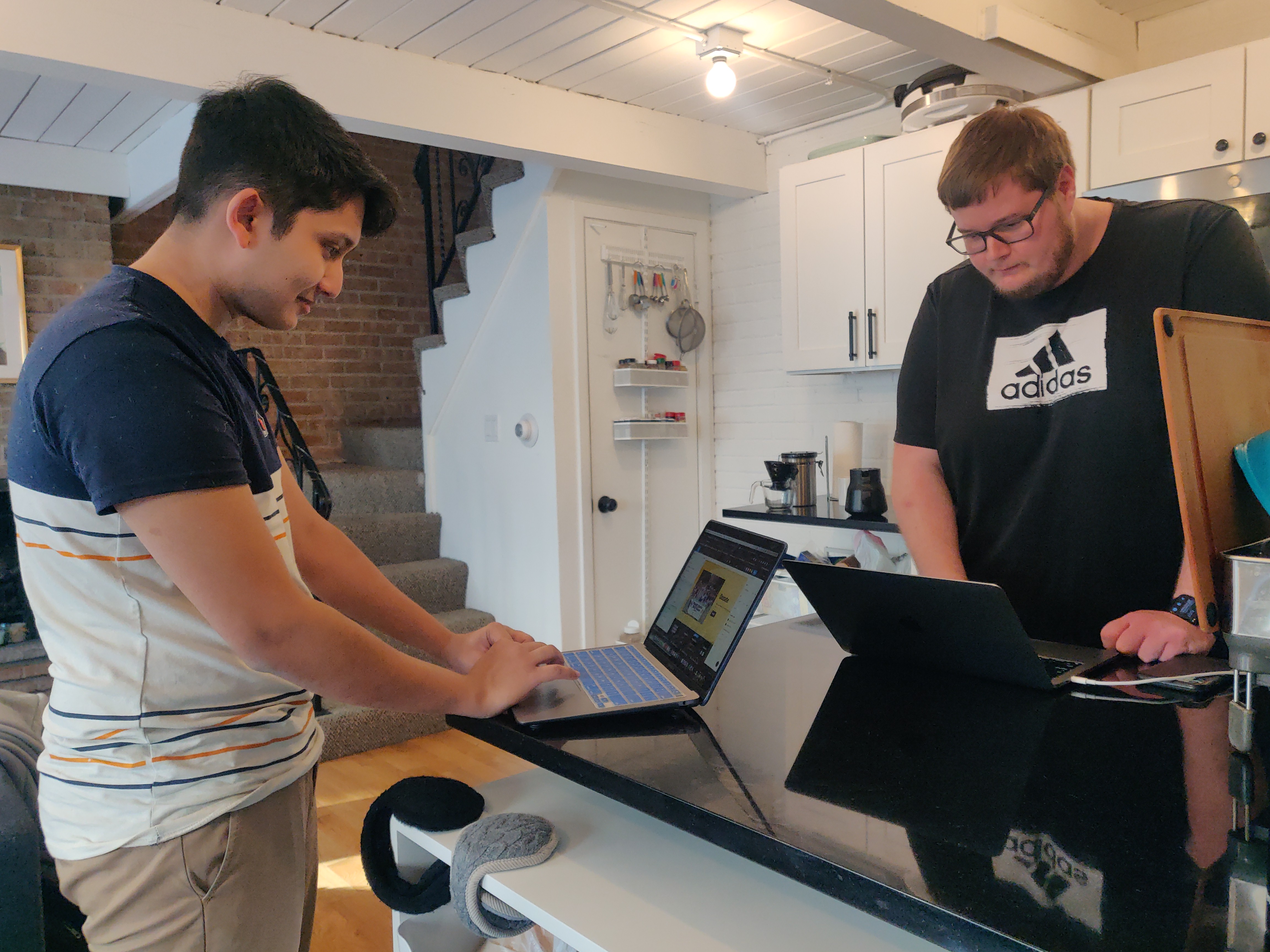
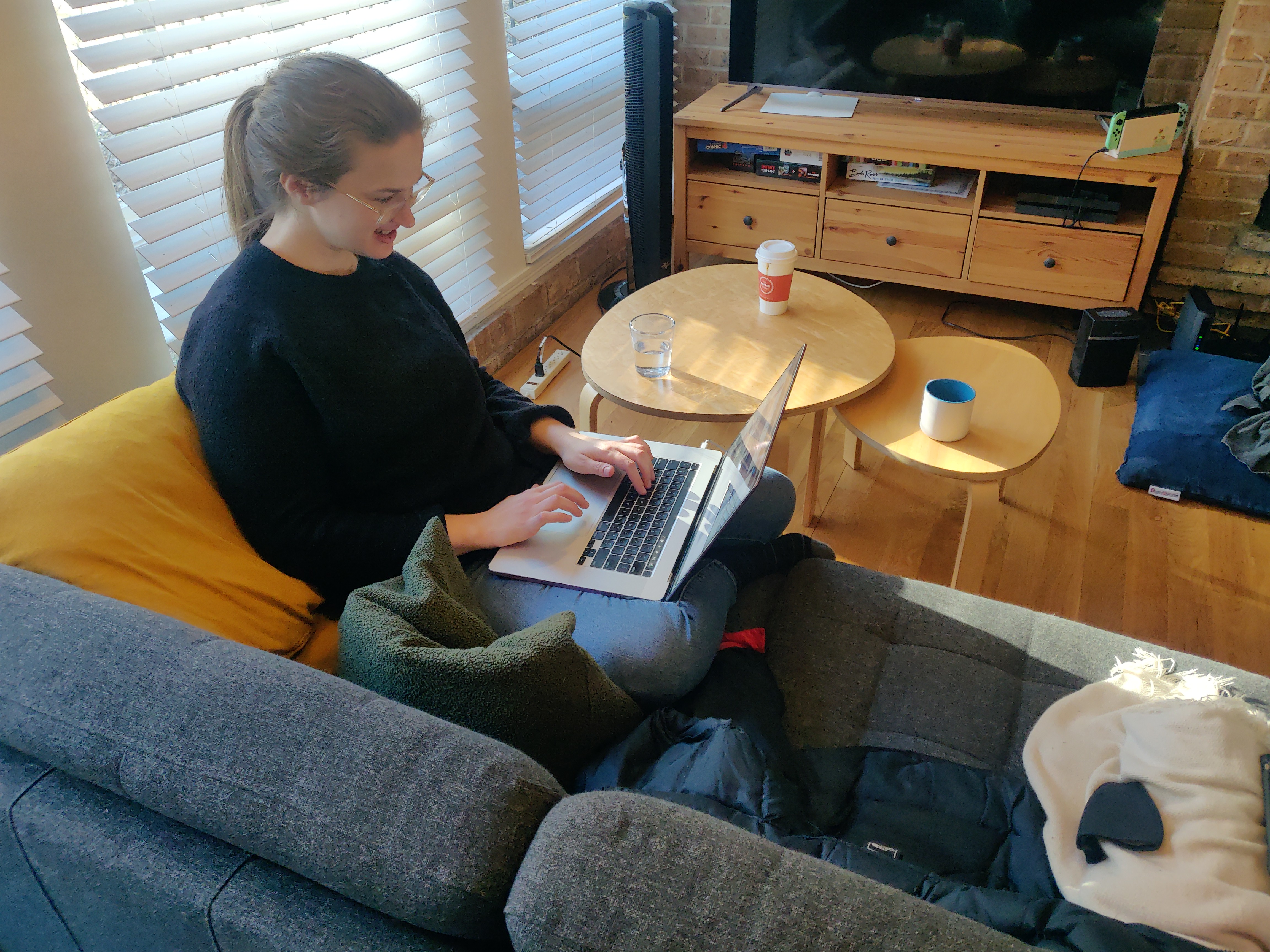
Alongside our other developer, I supported the Squarespace build. I facilitated the WYSIWYG implementation while he handled the custom code the platform's limitations required. We capped the project with an in-person meetup, the first time meeting as a team, to finalize outstanding design decisions and confirm what was actually feasible to ship.
Out of curiosity, I checked back on the site around the following year's parade. It was still live, still built on what we'd delivered, with only minor changes. Despite how the engagement ended, the work held up and stayed in use.